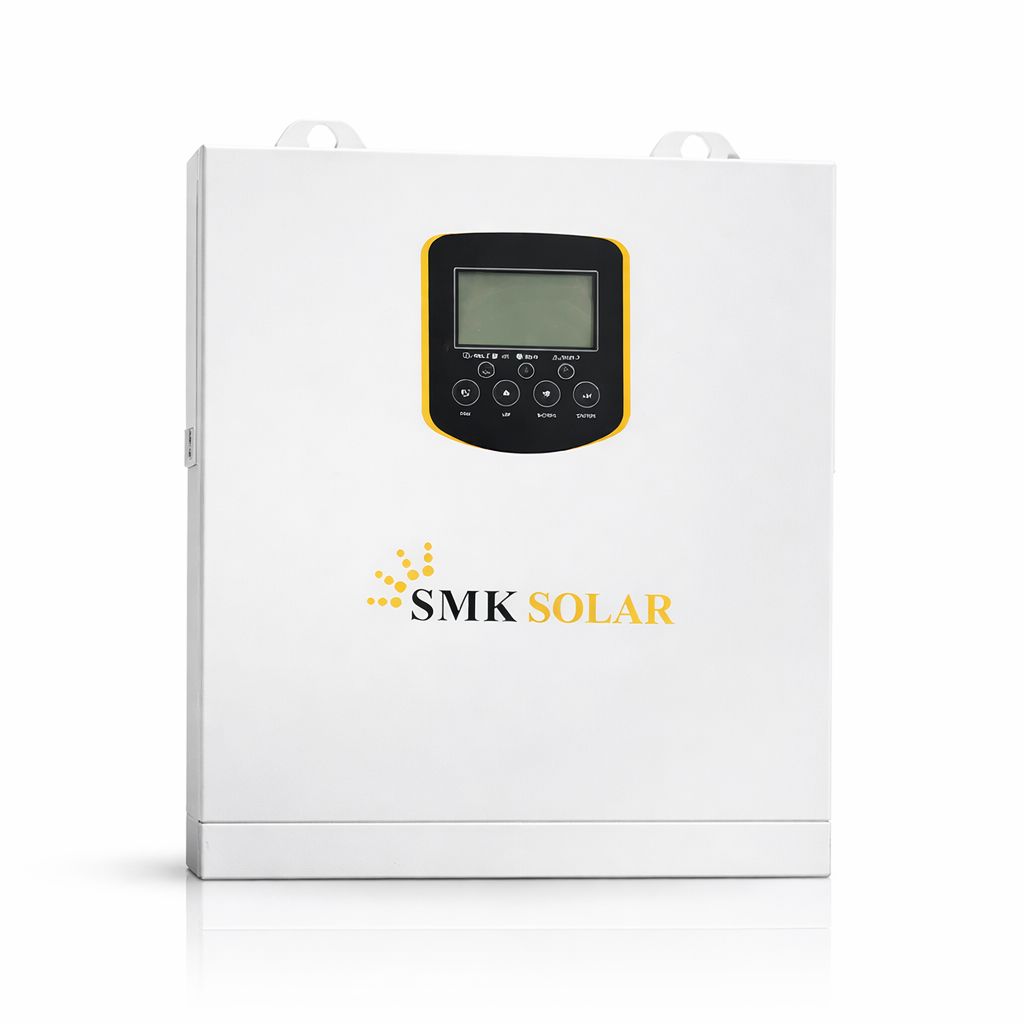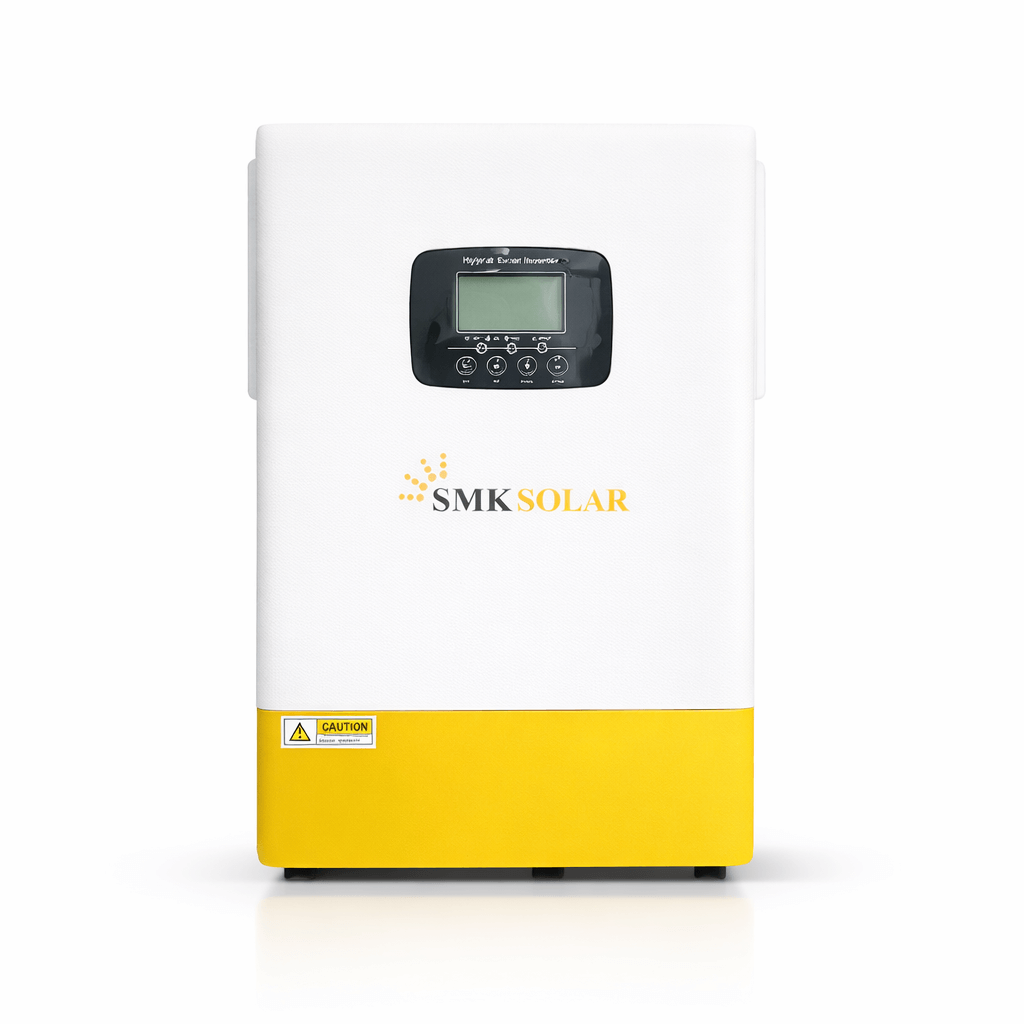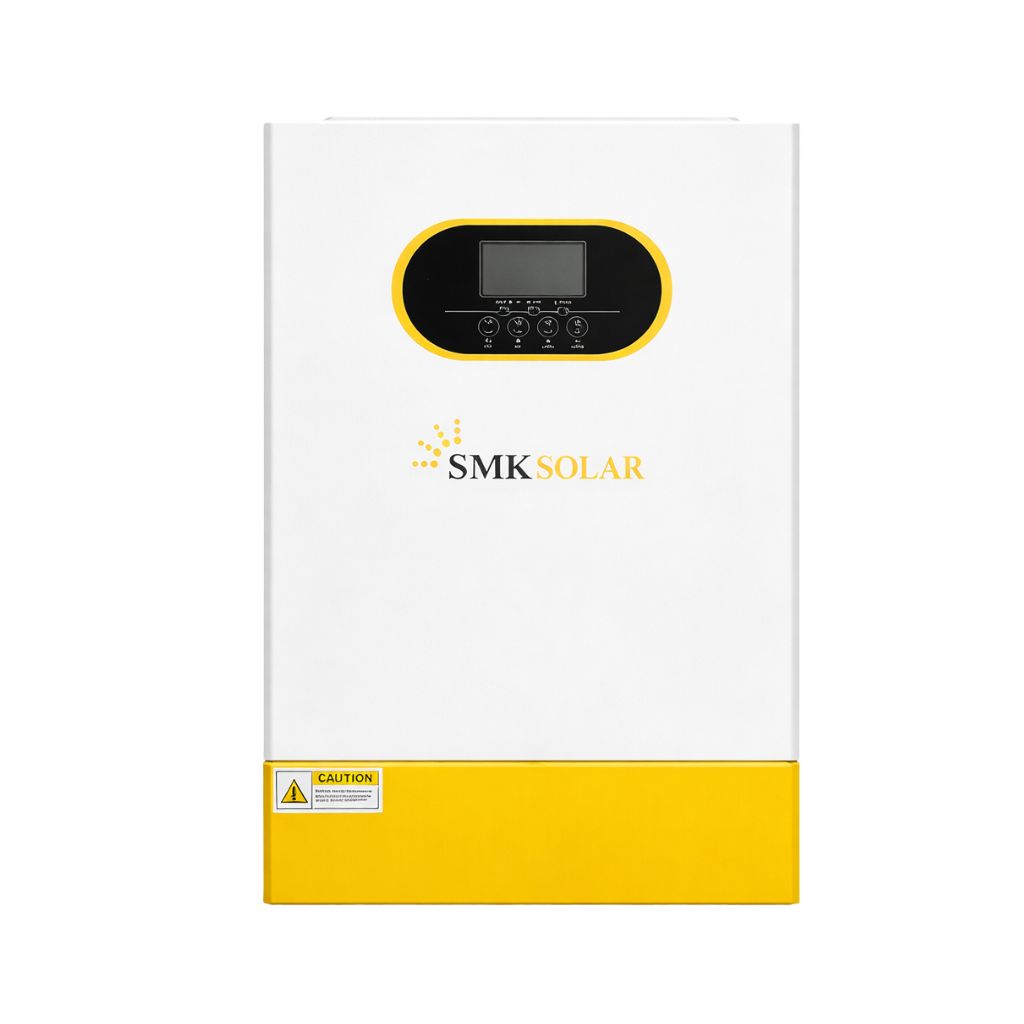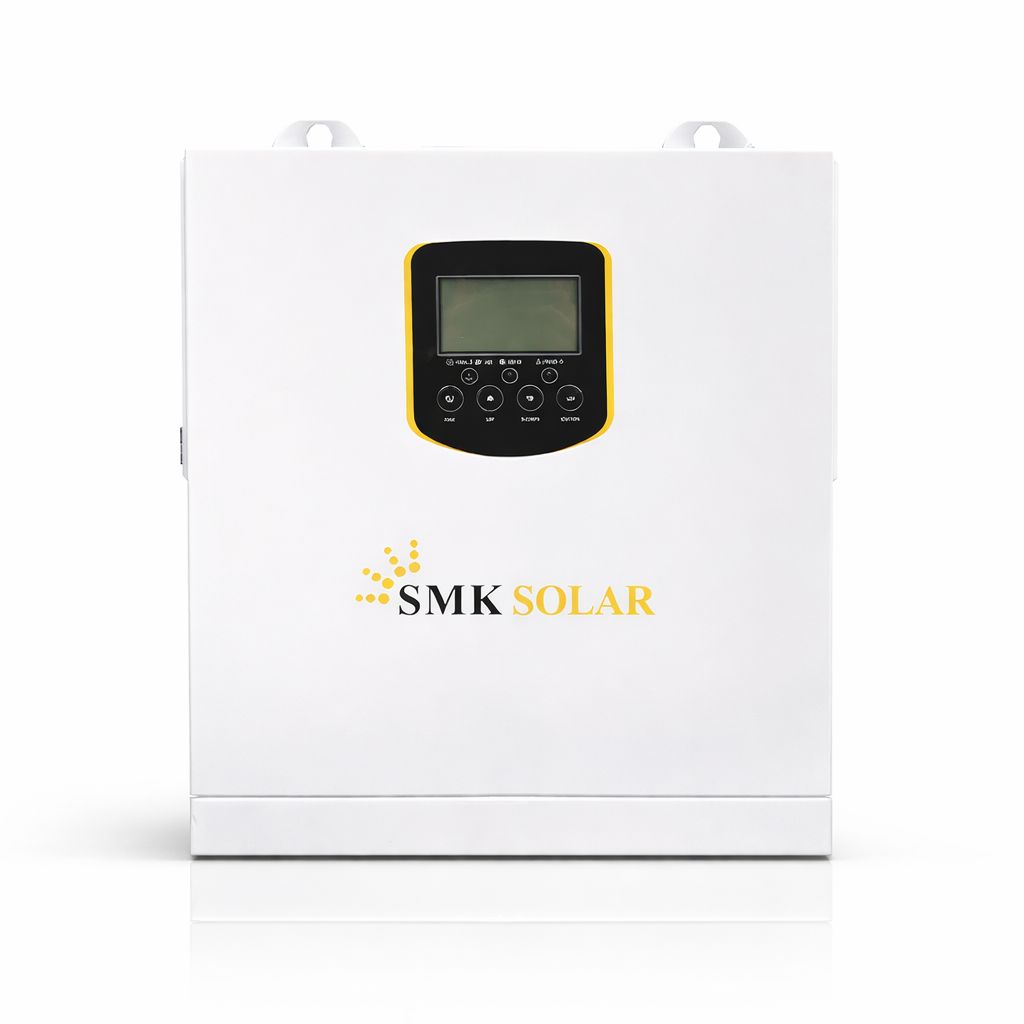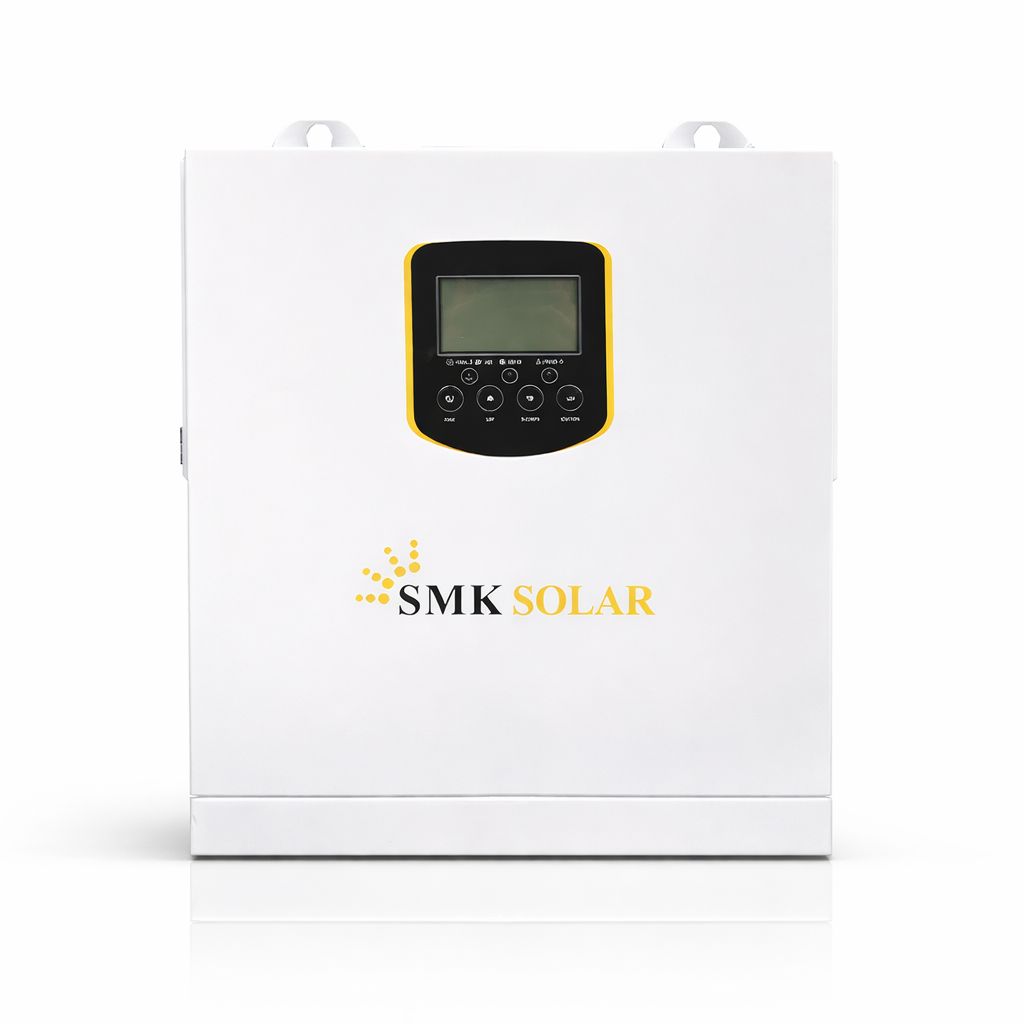
Frequent NEPA outages, rising Band A electricity tariffs, and the high cost of petrol generators make daily life frustrating for many homes in Lagos. The CM1.5KVA 12V Hybrid Inverter gives you a smarter way to keep essential appliances running — using solar panels, grid electricity, and batteries working together automatically, without you touching a switch. SMK Solar has been helping Nigerian homes and businesses switch to practical solar solutions since 2016, and this inverter is one of our most straightforward recommendations for everyday urban living.
The CM1.5KVA 12V Hybrid Inverter is designed for people who want stable backup power for everyday essentials without depending on a generator. Its 1.5kVA rating equals 1,500 watts of usable power, because this inverter operates at a power factor of 1.0 — meaning its apparent rating and its real output are identical. In plain terms: every unit of capacity you pay for can actually be used. Think of it like the control center of a small solar system, sitting between your panels, your battery, and your appliances and making decisions so you don’t have to.
What “Hybrid” means:
A hybrid inverter automatically switches between solar panels, battery storage, and grid electricity depending on what is available at any moment — like a smart traffic controller for electricity. During the day, solar panels power your appliances and charge the battery. At night, the battery takes over. If the battery runs low and NEPA supply is present, the inverter can draw from the grid automatically. You set the priority once during installation; the inverter handles the rest.
Fact: The CM1.5KVA inverter can charge batteries with up to 100A of combined solar and AC charging current, allowing faster battery recovery after extended outages.
Because the system provides 1,500W of usable power, it is well suited for essential appliances in small homes and apartments:
Fact: A properly sized hybrid solar system can reduce generator runtime by over 70% in many Nigerian homes, based on typical apartment load profiles.
The CM1.5KVA is not designed for heavy appliances, and it is important to be clear about this before you buy. Air conditioners, electric kettles, pressing irons, water pumping machines, and large refrigerators with high startup currents all exceed what this inverter can safely handle — most of these require a 3kVA to 5kVA system or larger. A single 1HP split-unit air conditioner alone draws approximately 1,000–1,200W at startup, leaving almost no room for anything else on a 1,500W system. Choosing the right inverter size from the start protects your equipment, prevents overload trips, and extends the lifespan of the inverter itself. Our team in Lagos helps customers match inverter size to real appliance lists every day — there is no guesswork needed.
This inverter is optimised for 12V tubular batteries, which are the most widely used battery type for inverter systems in Nigeria. Tubular batteries handle the deep discharge cycles that solar setups demand, they perform well in hot and dusty conditions, and they are available and serviceable across Lagos, Abuja, Benin City, Uyo, and Kano. At SMK Solar, we also supply compatible lithium (LiFePO4) and gel battery options depending on your budget and expected daily runtime. Lithium batteries typically last 3–4 times longer than tubular batteries in solar applications and charge faster, though they carry a higher upfront cost. Our team can help you combine the right inverter, battery bank, and solar panels into a balanced system sized for your actual load.
The CM 1.5KVA Hybrid Inverter is engineered for everyday power needs in small households and apartments — quiet, efficient, and straightforward to operate for anyone who has had enough of generator noise and fuel price.
Running a small petrol generator for 5–6 hours daily consumes roughly 3–5 litres of fuel per day. At ₦1,000 per litre, that amounts to ₦90,000–₦150,000 every month in petrol alone — before oil changes, spark plugs, and repair costs. Using solar power during daylight hours to cover most of that runtime brings that monthly spend down dramatically, often to near zero on sunny days.
This inverter produces pure sine wave electricity — the same smooth waveform that NEPA delivers on its best days, and what every sensitive appliance is designed to receive. Modified sine wave inverters, which are common in cheaper units, deliver a choppy signal that causes laptops to run hotter, TV screens to flicker, and inverter air conditioners to malfunction over time. Pure sine wave output eliminates those risks entirely, protecting every device connected to the system.
Older solar setups required a separate inverter, a separate solar charge controller, and a separate transfer switch — three devices to purchase, install, wire, and maintain. This inverter combines all three functions in one unit, which means simpler wiring, fewer points of failure, and a faster installation for any qualified electrician. The optional WiFi monitoring module lets you check your battery level, solar input, and connected load from your phone without visiting the unit.
Talk to the SMK Solar team and get a personalized solar setup recommendation based on your actual appliances and location.
Apartment dwellers in Lagos who want quiet backup power for lights, a TV, and internet during frequent outages, without the noise, fumes, or landlord complaints that come with a generator.
Home office workers and freelancers in Lagos or Abuja whose income depends on keeping a laptop and router running during long NEPA blackouts — the SBU priority mode runs the grid as a last resort, keeping their electricity bill minimal.
Small shop owners running a barbing salon, phone accessories stall, or tailoring studio who need to power equipment, lighting, and a POS machine without generator fuel costs disrupting their margins.
Residents in areas with 12–18 hours of daily power outages — particularly in parts of Uyo, Akwa Ibom, and Benin City — who need dependable basic electricity through the night and early morning hours.
Families looking for a generator alternative for everyday appliances — lights, fans, TV, and phone charging — who want a system that works automatically without daily manual intervention.
Tenants who cannot install a large rooftop system but still want meaningful backup power from a compact, indoor-friendly unit that requires no structural changes to the building.
Cost-conscious homeowners in Abuja, Kano or anywhere in Nigeria who have seen their electricity bill rise sharply under Band A and Band B tariff revisions and want to minimise grid consumption during hours when solar is available.
Spec | Value |
Model | CM1.5KVA 12V Hybrid Inverter |
Capacity | 1.5kVA / 1,500W |
AC Input Voltage | 230VAC |
Battery Voltage | 12V |
DC Output | 13.5VDC |
Max AC Charging Current | 60A (default: 30A) |
Max Charge Current (PV + AC) | 100A |
Built-in MPPT Controller | 50A / 60A |
PV Input Voltage Range | 30VDC – 160VDC |
Max Solar Input Voltage | 500VDC |
Output Waveform | Pure Sine Wave |
Power Factor | 1.0 |
Output Priority Modes | UTL / SOL / SBU |
Remote Monitoring | Optional WiFi module |
Environmental Protection | Detachable dust cover |
Warranty | 18 Months |
This inverter provides 1,500 watts of usable power, which comfortably covers everyday household essentials: LED lights, ceiling and standing fans, a 32–40 inch LED television, a laptop, a WiFi router, phone chargers, and a decoder. A typical apartment running 6 LED bulbs, one fan, one TV, a laptop, and a router draws around 380W — well within the inverter’s capacity and gentle on the battery. Heavy appliances like air conditioners, electric kettles, pressing irons, and water pumps are not suitable for this system, as they require far more power than this inverter is rated to deliver.
Yes. The CM1.5KVA will operate as a standard backup inverter using grid electricity and a battery bank even if no solar panels are connected. When NEPA supply is present, it charges the battery from the grid; when the grid goes down, it switches to battery power automatically. Solar panels can be added later when your budget allows — the built-in MPPT charge controller will be ready to use them without any additional hardware.
The inverter is optimised for 12V tubular batteries, which are the standard for solar systems in Nigeria due to their availability, durability in tropical heat, and ability to handle repeated deep discharge cycles. Lithium (LiFePO4) batteries are also compatible and offer a longer lifespan and faster charging, though pairing them correctly requires confirming that the battery’s BMS (battery management system — the internal safety circuit that controls charging and discharging) is configured to match this inverter’s charge parameters. Speak to our team before combining a lithium battery with this unit to confirm compatibility.
MPPT stands for Maximum Power Point Tracking — a charging technology built into this inverter that continuously adjusts how it draws current from your solar panels to extract the maximum possible energy at any given moment, even as sunlight intensity changes throughout the day. A basic PWM (Pulse Width Modulation) charge controller, found in cheaper systems, is less adaptive and can waste 20–30% of available solar energy. The CM1.5KVA’s built-in 50A/60A MPPT controller means more energy reaches your battery from the same panels — which translates directly to longer backup hours without adding more batteries.
The CM1.5KVA 12V Hybrid Inverter carries an 18-month manufacturer’s warranty covering defects in materials and workmanship under normal operating conditions. The warranty does not cover damage from incorrect installation, overvoltage caused by an improperly sized solar array, physical damage, or use with incompatible batteries. SMK Solar provides warranty support for customers who purchased through our store or authorised channels — keep your purchase receipt and note your installation date, as both may be required when making a warranty claim.
A standard inverter has one job: convert stored battery power into AC electricity for your appliances, and recharge the battery from the grid when NEPA is available. A hybrid inverter adds a third power source — solar panels — and manages all three simultaneously using built-in intelligence. It decides in real time whether to power your loads from solar, draw from the battery, or accept grid power, based on the priority mode you choose during setup. This means the hybrid inverter actively reduces your electricity bill and generator usage every day, rather than simply providing emergency backup when the grid fails.
These three modes control which power source the inverter prioritises when multiple sources are available at the same time. UTL (Utility First) runs your loads from the grid whenever NEPA supply is present, and only draws from battery or solar when the grid fails — this mode minimises battery wear but does not reduce your electricity bill. SOL (Solar First) runs loads from solar whenever sunlight is sufficient, supplementing from battery or grid as needed — a good choice for daytime-heavy users. SBU (Solar → Battery → Utility) is the most cost-efficient setting for Nigerian conditions: it exhausts solar and battery power before touching the grid at all, keeping your PHCN meter as inactive as possible while maintaining continuous supply.
A well-maintained hybrid inverter of this type typically lasts 8–12 years under normal residential use. The two biggest factors affecting lifespan are heat management and battery quality — a poorly ventilated installation or a mismatched battery will shorten the inverter’s life regardless of its build quality. The CM1.5KVA’s detachable dust cover is specifically designed for environments like Kano or inland Abuja where harmattan dust can clog cooling vents and cause components to overheat. Installing the unit in a cool, ventilated location away from direct sunlight and moisture is the single most effective thing you can do to extend its service life.
Yes — this is one of the most practical inverter choices for households and small businesses in areas where grid supply is absent for 12 hours or more daily, including parts of Benin City, Uyo, and inner-city Lagos. When paired with a 200Ah tubular battery and 400–600W of solar panels, the system can cover most essential loads through daylight and evening hours without touching the grid at all. On days with good sunlight, the battery is typically fully recharged by early afternoon, leaving it ready for the evening and overnight period. For communities with outages longer than 18 hours daily, our team can recommend a larger battery bank to extend the coverage window.
Yes, and we strongly recommend it. Professional installation ensures correct battery cable sizing, safe wiring, and proper solar array configuration — all of which affect both the inverter’s performance and its warranty validity. The hybrid design eliminates the need for a separate transfer switch, which simplifies the installation compared to older setups, but the wiring still involves DC and AC circuits that carry real risk if handled incorrectly. SMK Solar provides installation guidance and can connect customers in Lagos, Abuja, Benin City, Uyo, and Kano with qualified installers in their area.
Step into any of our branches in Lagos, Kano, Benin, or Uyo to see our SMK technology in action and speak with our technical team.
Tell us what you need to power, and our engineers will design a customized SMK Solar solution tailored to your home or business.
Have questions or need advice? Reach out to our professional team and get fast, reliable assistance.
WhatsApp us