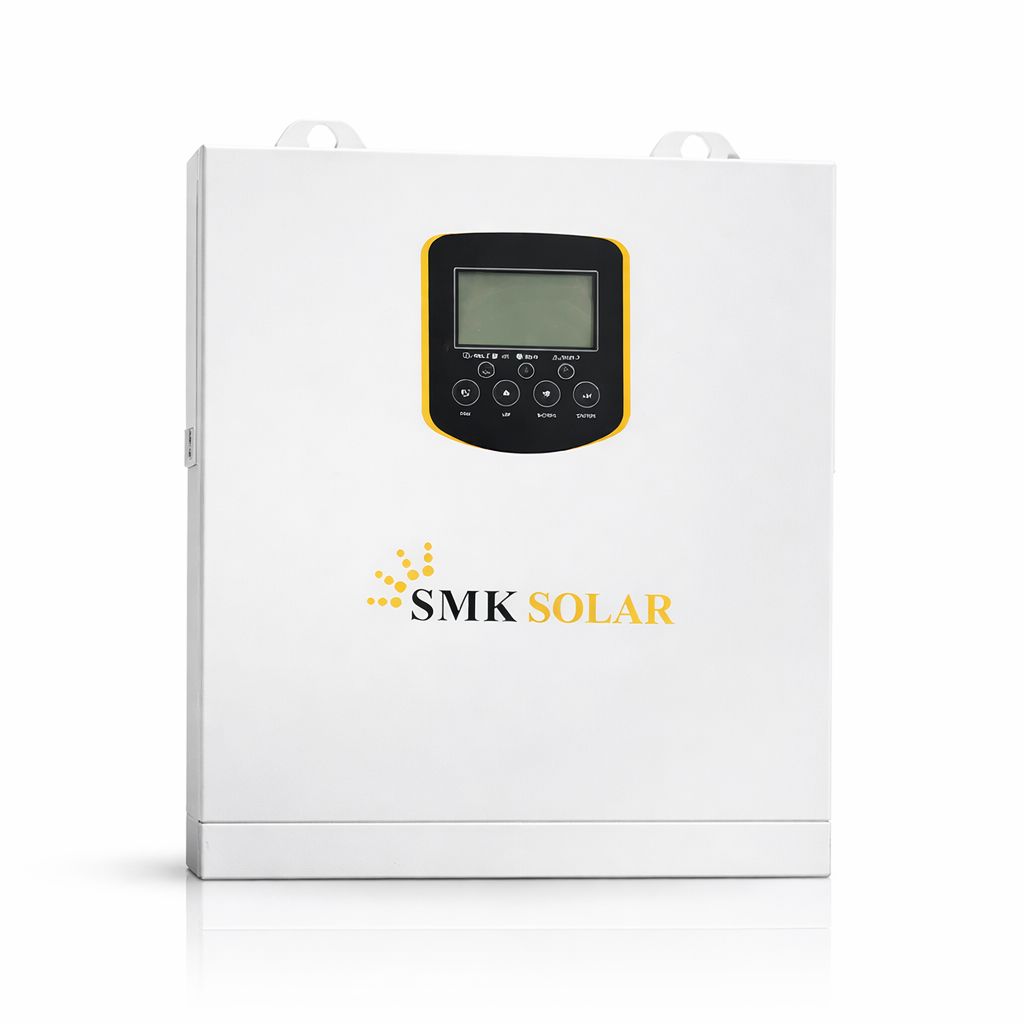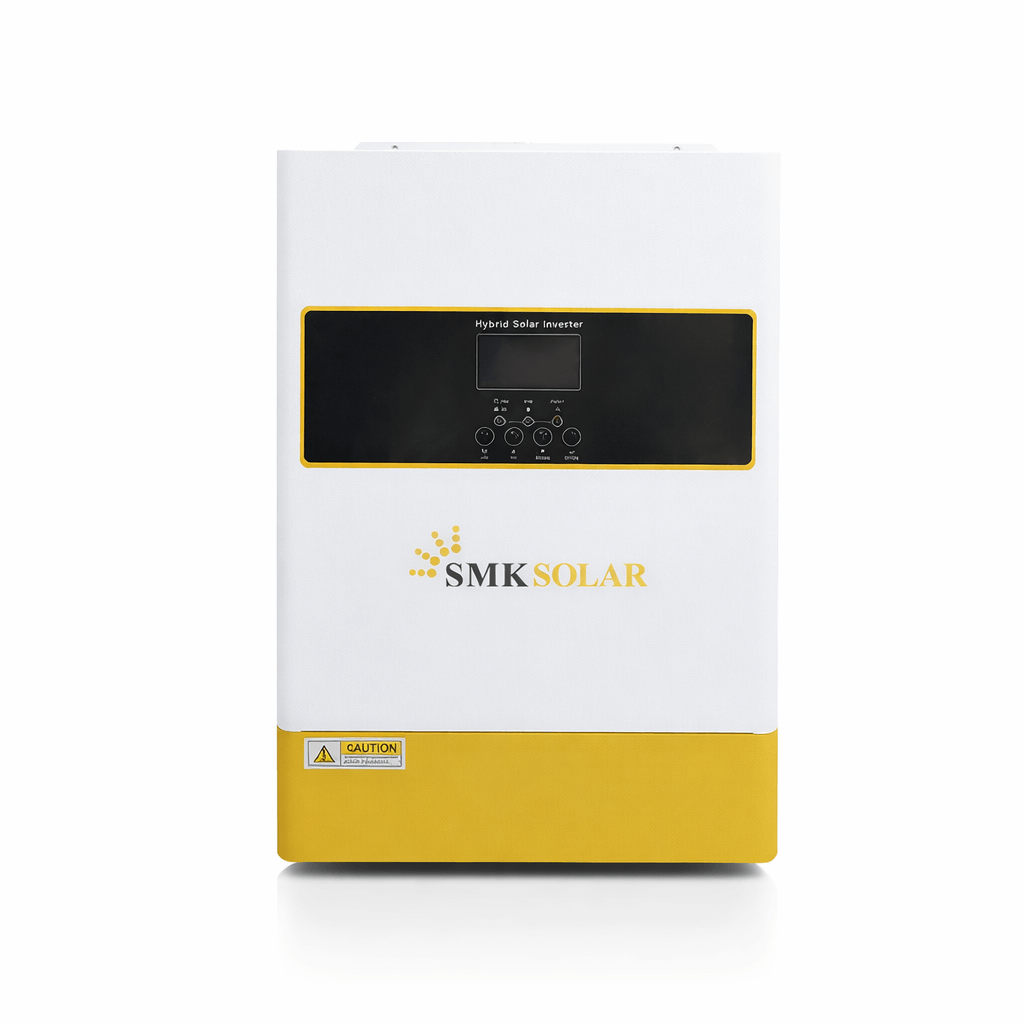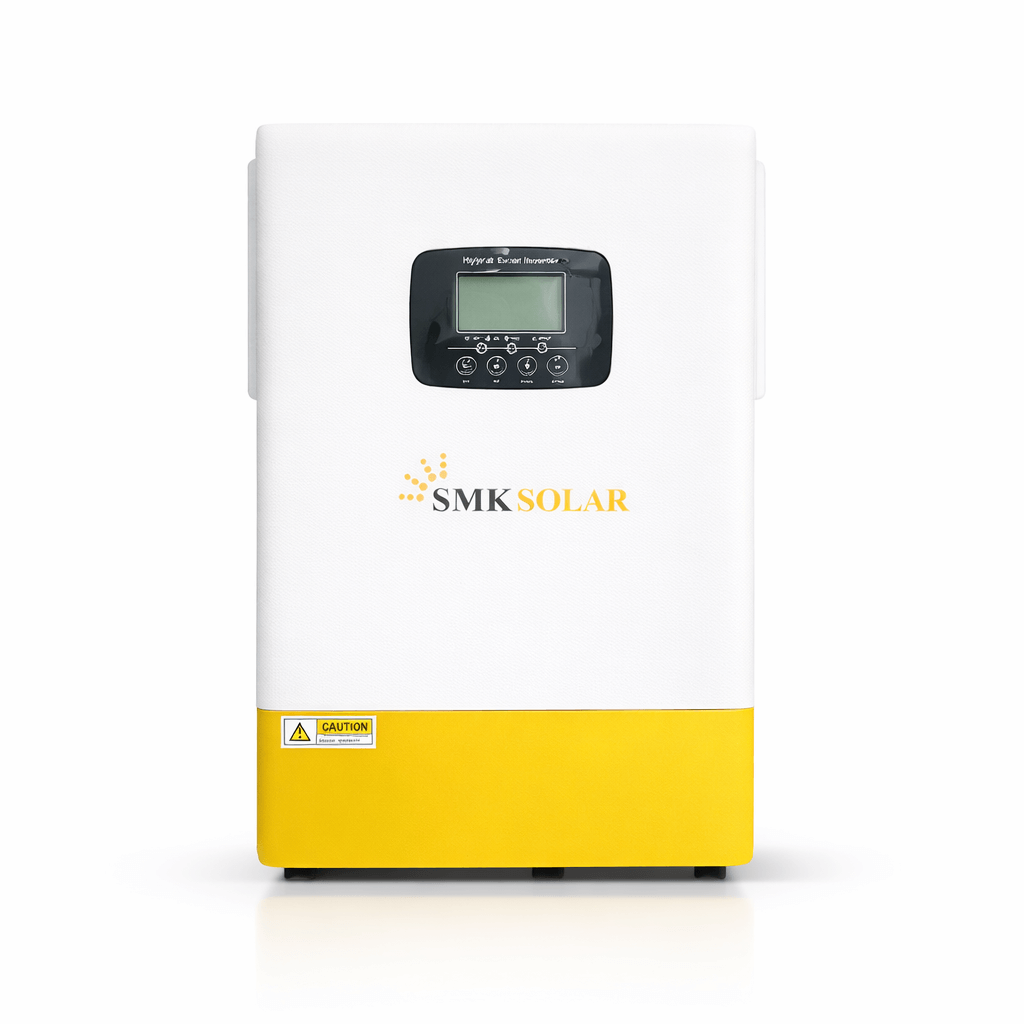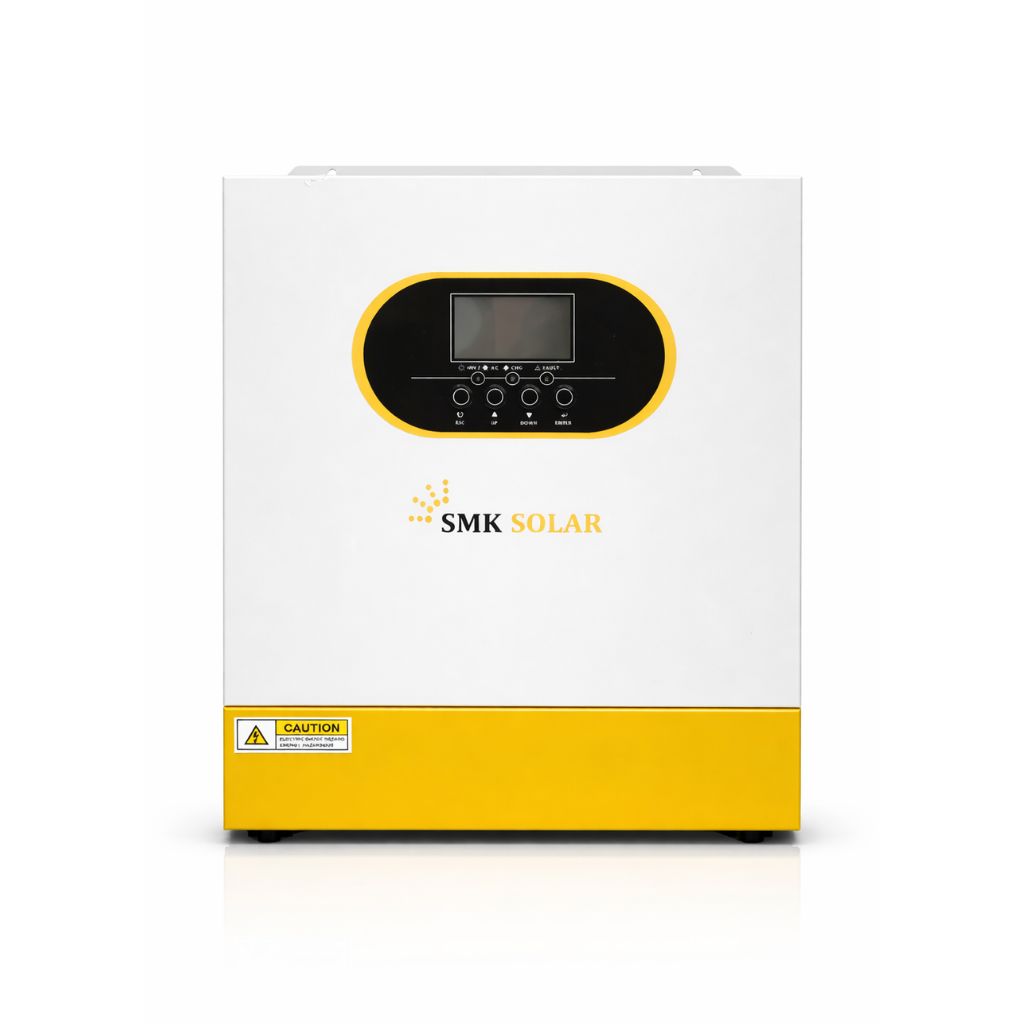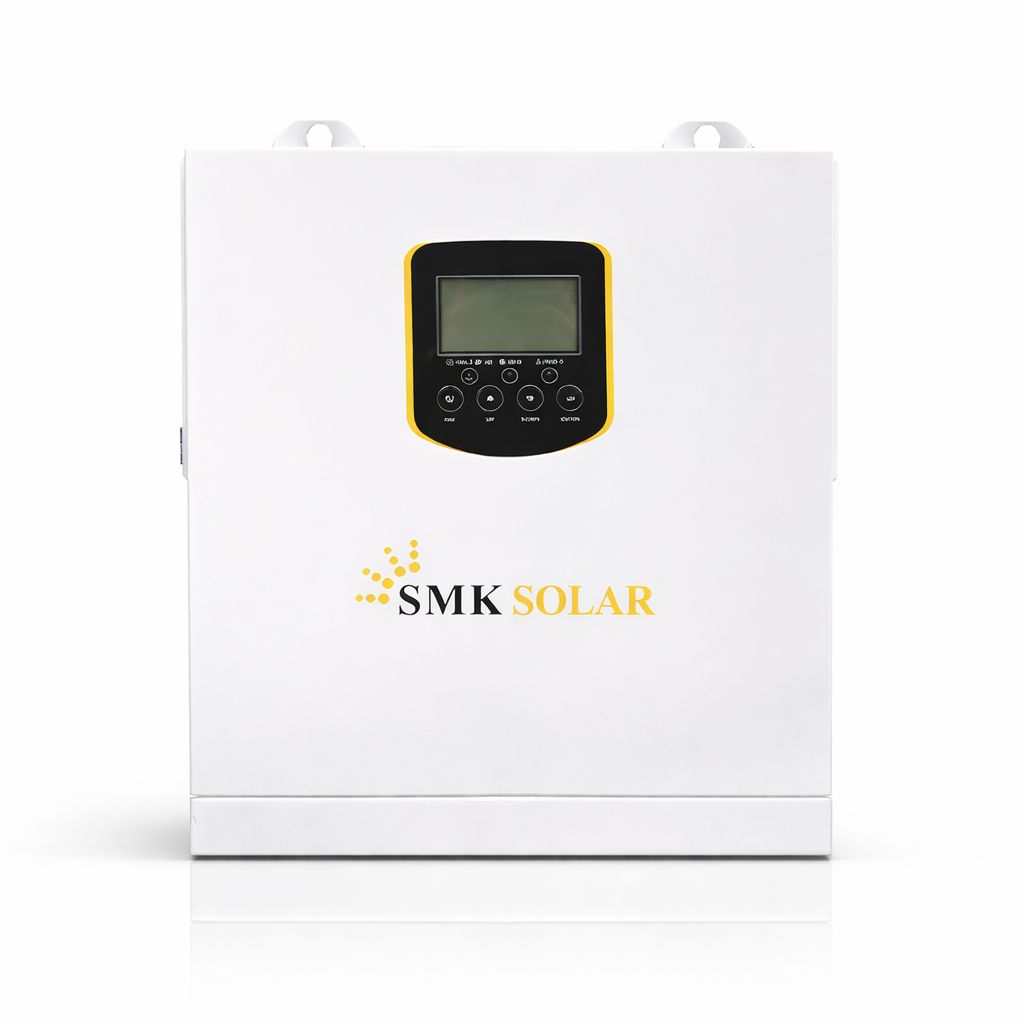
Between Band A electricity tariffs pushing household bills past ₦50,000 monthly and petrol prices making generator use feel like a punishment, many Lagos households are caught between two expensive options. The CM 2.5KVA 24V Hybrid Inverter gives you a practical third path — a single unit that draws from solar panels during the day, your battery bank at night, and the grid only when both run low, keeping your home or small business running without the noise, fumes, or fuel queue. SMK Solar has been building complete solar systems for Nigerian homes and businesses since 2016, and this inverter is one of our most popular recommendations for households ready to move beyond basic backup power.
The CM 2.5KVA 24V Hybrid Inverter is a 24-volt hybrid inverter designed to manage the power needs of a medium-sized Nigerian household or small business. Its 2.5kVA rating translates directly to 2,500 watts of usable power when running standard home appliances — because the inverter operates at a power factor of 1.0 for resistive and most common loads, meaning its rated capacity and its real output are effectively identical for everyday use. Think of it like a generator with a 2,500W engine: that ceiling determines what you can run simultaneously, not what you run one at a time. It sits comfortably between the entry-level 1.5kVA Inverter and the heavier 3.5kVA inverter, making it the right fit for households that need more than lights and a TV but are not running industrial-scale equipment.
What “Hybrid” means:
A hybrid inverter does what no standard inverter can — it manages three separate power sources simultaneously and chooses automatically which one to use at any given moment. Solar panels charge the battery and power your appliances during daylight. After sunset, the battery takes over. If the battery runs low and NEPA supply is present, the inverter switches to grid power to keep your loads running and top up the battery. All of this happens without any manual switching, any intervention from you, or any gap in your power supply. You choose a priority mode during installation — Solar First, Battery First, or Grid First — and the inverter executes that preference around the clock.
With 2,500W of continuous output capacity, the CM2.5KVA handles a realistic combination of home and small office appliances:
The CM2.5KVA is not the right choice if you need to run a 1.5HP or larger air conditioner, an electric water heater, a pressing iron, an electric cooker, or a borehole water pump. These appliances either draw more continuous power than 2,500W allows or generate startup surges that exceed safe operating limits for this unit. If your household runs a 1.5HP AC as a primary appliance, or if you have more than one AC unit you need on simultaneously, the 3.5kVA or 5kVA inverter options in our range are the appropriate next step. Getting the inverter size right before purchase protects your equipment, prevents overload shutdowns, and ensures you are not replacing the unit within a year — our team in Lagos is available to help you match capacity to your actual load list before you commit.
The CM2.5KVA runs on a 24V battery system, which means it requires two 12V batteries wired in series — for example, two 200Ah 12V tubular batteries — or a single 24V lithium battery pack. Tubular batteries are the most widely used option for solar systems in Nigeria, offering strong performance in tropical heat and the ability to handle the repeated deep discharge cycles that solar setups demand. Lithium (LiFePO4) batteries are also compatible and offer a longer usable lifespan, faster charging, and the ability to discharge more deeply without degrading — making them a stronger long-term investment for households with high daily energy consumption. At SMK Solar, we carry compatible battery options for both preferences, and our team can help you calculate the right battery capacity to cover your specific load through your longest typical outage period.
The CM 2.5KVA is engineered for households that have tried a smaller inverter and found it lacking — not enough capacity for the air conditioner, not enough charging speed to recover overnight, not enough flexibility to handle a real family’s daily load. This unit addresses all three without stepping up to a 3.5kVA price point.
A household in Lagos running a 2kVA petrol generator for 8 hours daily at ₦1,500 per litre, consuming roughly 1.5 litres per hour, spends approximately ₦540,000 per year on fuel before a single maintenance visit. Replacing that daily generator runtime with solar-charged battery power through the CM 2.5KVA — even partially, covering the daylight and early evening hours — cuts that annual cost by more than half in most Lagos and Abuja conditions.
The CM 2.5KVA produces pure sine wave electricity — the same smooth, consistent waveform your inverter air conditioner, refrigerator compressor, and laptop power supply were all designed to receive. Modified sine wave inverters, still widely sold in Lagos and Kano markets at lower prices, deliver a jagged electrical signal that causes inverter ACs to run less efficiently, shortens compressor lifespan, and can cause permanent damage to variable-speed motors and sensitive electronics.
Rather than purchasing a separate solar charge controller, a separate inverter, and a separate transfer switch, the CM 2.5KVA combines all three functions in a single unit that one qualified electrician can install in a single session. Once it is set up with your chosen priority mode, the inverter manages every source switch automatically — day, night, cloudy days, and NEPA interruptions — without requiring you to touch anything.
Our team can review your appliance list and tell you exactly what a complete CM 2.5KVA system would cover and cost for your home.
Mid-sized household owners in Lagos running a 1HP air conditioner, refrigerator, and multiple rooms of lighting who need an inverter with enough headroom to handle all three simultaneously without overloading.
Home office professionals and freelancers in Abuja or Lagos who depend on a desktop computer, external monitor, and WiFi router staying live through 10–15 hour NEPA outages, and cannot afford the risk of a power cut interrupting client calls or corrupting work files.
Small business owners operating a pharmacy, provision store, or barbershop who need to keep refrigeration, lighting, fans, and a POS machine running through daily outages without the noise and fuel expense of a generator disturbing customers.
Residents in communities where grid supply is frequently absent for 16–20 hours per day — paired with a 200Ah 24V battery bank and 600–800W of solar panels, this inverter can cover essential loads through daylight and most of the evening without any grid input.
Households upgrading from a 1.5kVA inverter that could not power their air conditioner or kept tripping on combined loads — the 2.5kVA capacity handles a 1HP AC plus supporting appliances without pushing the unit close to its limits.
Cost-conscious homeowners whose electricity bills have climbed under Band A and Band B tariff revisions and want to run the inverter in SBU mode, consuming grid electricity only after solar and battery are both exhausted.
First-time solar buyers in Lagos who want a complete, professionally installed system that manages itself after setup, rather than a DIY arrangement of mismatched components that requires constant monitoring.
|
Feature |
Specification |
|
Model |
CM2500-24N |
|
Capacity |
2500VA/2500W |
|
Parallel Capability |
NO |
|
Lithium Battery Activation |
NO |
|
Lithium Battery Communication |
NO |
|
Inverter Wake-up Function |
YES |
|
INPUT |
|
|
Nominal Voltage |
230VAC |
|
Acceptable Voltage Range |
170-280VAC (PC); 90-280VAC (Home Appliances) |
|
Frequency |
50/60 Hz (Auto sensing) |
|
OUTPUT |
|
|
Nominal Voltage |
220/230VAC±5% |
|
Surge Power |
5000VA |
|
Frequency |
50/60 Hz |
|
Waveform |
Pure Sine wave |
|
Transfer Time |
10ms (PC); 20ms (Home Appliances) |
|
Peak Efficiency (PV to INV) |
96% |
|
Peak Efficiency (Battery to INV) |
93% |
|
Overload Protection |
5s@ >=140% load; 10s@100%~140% load |
|
Crest Factor |
3:1 |
|
Admissible Power Factor |
0.6~1 (inductive or capacitive) |
|
BATTERY |
|
|
Battery Voltage |
24Vdc |
|
Floating Charge Voltage |
27Vdc |
|
OverCharge Protection |
32Vdc |
|
Charging Method |
CC/CV |
|
SOLAR CHARGER & AC CHARGER |
|
|
Solar Charger TYPE |
MPPT |
|
Max.PV Array Power |
3000W |
|
Max. PV Array Open Circuit Voltage |
500VDC |
|
PV Array MPPT Voltage Range |
30VDC~500VDC |
|
Max. Solar Input Current |
15A |
|
Max. Solar Charge Current |
100A |
|
Max. AC Charge Current |
60A |
|
Max. Charge Current(AC+PV) |
100A |
|
PHYSICAL |
|
|
Dimensions, D x W x H(mm) |
330*278*98 |
|
Package Dimensions, D x W x H(mm) |
400*365*174 |
|
Net Weight (Kgs) |
3.95 |
|
Communication Interface |
RJ45 For WiFi |
|
ENVIRONMENT |
|
|
Operating Temperature Range |
-10°C to 55°C |
|
Storage temperature |
-15°C~ 60°C |
|
Humidity |
5% to 95% Relative Humidity (Non-condensing) |
The CM 2.5KVA provides 2,500W of continuous output, which comfortably covers a 1HP split-unit air conditioner (900–1,100W running), an energy-efficient refrigerator (120–200W), several LED bulbs, fans, a television, and a laptop or router running together. A realistic combined load of all those appliances typically sits between 1,600W and 2,000W during normal operation, leaving the inverter with comfortable headroom rather than running at its ceiling. Electric kettles, pressing irons, and electric water heaters are not suitable — their heating elements draw 1,500–3,000W continuously and would consume most or all of the inverter’s capacity while leaving nothing for other appliances.
Yes. The CM 2.5KVA functions as a full battery backup inverter using only grid electricity and a battery bank, with no solar panels required. When NEPA supply is present, it charges the battery from the grid; when the grid goes down, it switches to battery power automatically with no interruption. Solar panels can be added at any point after the initial installation — the built-in MPPT charge controller is ready to receive them without any additional hardware or changes to the existing wiring.
The CM 2.5KVA operates on a 24V battery system, meaning it requires two 12V batteries connected in series or a single 24V battery unit. Both tubular lead-acid and lithium (LiFePO4) batteries are compatible. Tubular batteries are more affordable upfront and widely available across Lagos, Abuja, and Benin City, but typically last 3–5 years under regular solar cycling. Lithium batteries carry a higher purchase price but last 8–10 years, charge faster, and can be discharged more deeply without degrading — making them the better value over a 10-year system lifespan for households with high daily energy needs.
MPPT stands for Maximum Power Point Tracking — a technology built into this inverter’s solar charge controller that continuously adjusts how it draws current from your solar panels to extract the maximum possible energy at every moment, even as cloud cover or sun angle changes throughout the day. A basic PWM (Pulse Width Modulation) controller, found in lower-cost systems, operates at a fixed draw rate and can waste 20–30% of available solar energy compared to MPPT under real-world conditions. In practical terms, MPPT means your battery charges faster from the same panels, which extends your backup hours without requiring a larger battery bank.
The CM 2.5KVA 24V Hybrid Inverter carries an 18-month manufacturer’s warranty covering defects in materials and workmanship under normal operating conditions. The warranty does not cover damage from incorrect installation, overvoltage caused by an improperly wired solar array, physical damage, flooding, or use with batteries that fall outside the unit’s specified voltage range. SMK Solar supports warranty claims for customers who purchased through our store or authorised channels — retain your purchase receipt and record your installation date, as both are required when raising a warranty claim.
A standard inverter does one thing: it converts battery power to AC electricity and recharges the battery from the grid when NEPA is available. It has no awareness of solar panels and no ability to use them. The CM 2.5KVA adds a built-in solar charge controller and automatic source management, meaning it draws from three sources — solar, battery, and grid — and chooses between them based on your priority setting and what is available at each moment. The difference in daily operation is that a standard inverter never reduces your electricity bill or generator dependency; the hybrid inverter is specifically designed to do both.
With correct installation, adequate ventilation, and a properly matched battery bank, a hybrid inverter of this class typically lasts 8–12 years under normal residential use. The most common causes of premature failure in Nigerian solar installations are inadequate battery cable sizing — which causes excessive heat buildup — and installation in enclosed, poorly ventilated spaces where ambient temperature consistently exceeds 45°C. The CM 2.5KVA’s operating range extends to 50°C, which accommodates Nigerian climate conditions, but keeping it in a cool, shaded, dust-managed location adds meaningfully to its service life
Yes — the CM 2.5KVA is specifically well-suited for areas like Benin City, Uyo, and parts of Kano where daily grid availability can fall below 4–6 hours. In SBU priority mode, the inverter draws from solar first, then battery, then grid — meaning even brief NEPA availability is used to top up the battery rather than power your loads directly, preserving every available unit of grid supply as a reserve. Paired with a 200Ah 24V tubular battery bank and 600–800W of solar panels, this system can realistically cover essential household loads through a 20-hour outage on a day with good sunlight, with the battery starting the night period at or near full charge.
These three settings determine which power source the inverter prioritises. UTL (Utility First) runs your loads from the grid whenever NEPA is available and only switches to battery or solar when the grid fails — this minimises battery cycling but keeps your electricity meter running. SOL (Solar First) prioritises solar power during daylight hours, supplementing from battery or grid as needed — a good balance for most households. SBU (Solar → Battery → Utility) is the most cost-efficient setting for Nigerian conditions: it exhausts solar and battery before drawing a single unit from the grid, keeping your electricity bill as low as possible. For most Lagos and Abuja households facing high tariffs, SBU is the recommended default.
Yes, and we recommend against any DIY approach for a 24V system at this capacity. The DC battery wiring carries high current — a 100Ah charge current through undersized cables generates serious heat and creates a genuine fire risk. The AC output circuit connects to your household wiring and powers live appliances. Both circuits require correct sizing, correct protective fusing, and correct earthing to operate safely and maintain warranty coverage. The hybrid design eliminates the need for a separate transfer switch and simplifies the overall installation, but the job still requires a qualified electrician with solar experience. SMK Solar can connect customers in Lagos, Abuja, Benin City, Uyo, Kano or anywhere in Nigeria with certified installers in their area.
Step into any of our branches in Lagos, Kano, Benin, or Uyo to see our SMK technology in action and speak with our technical team.
Tell us what you need to power, and our engineers will design a customized SMK Solar solution tailored to your home or business.
Have questions or need advice? Reach out to our professional team and get fast, reliable assistance.
WhatsApp us