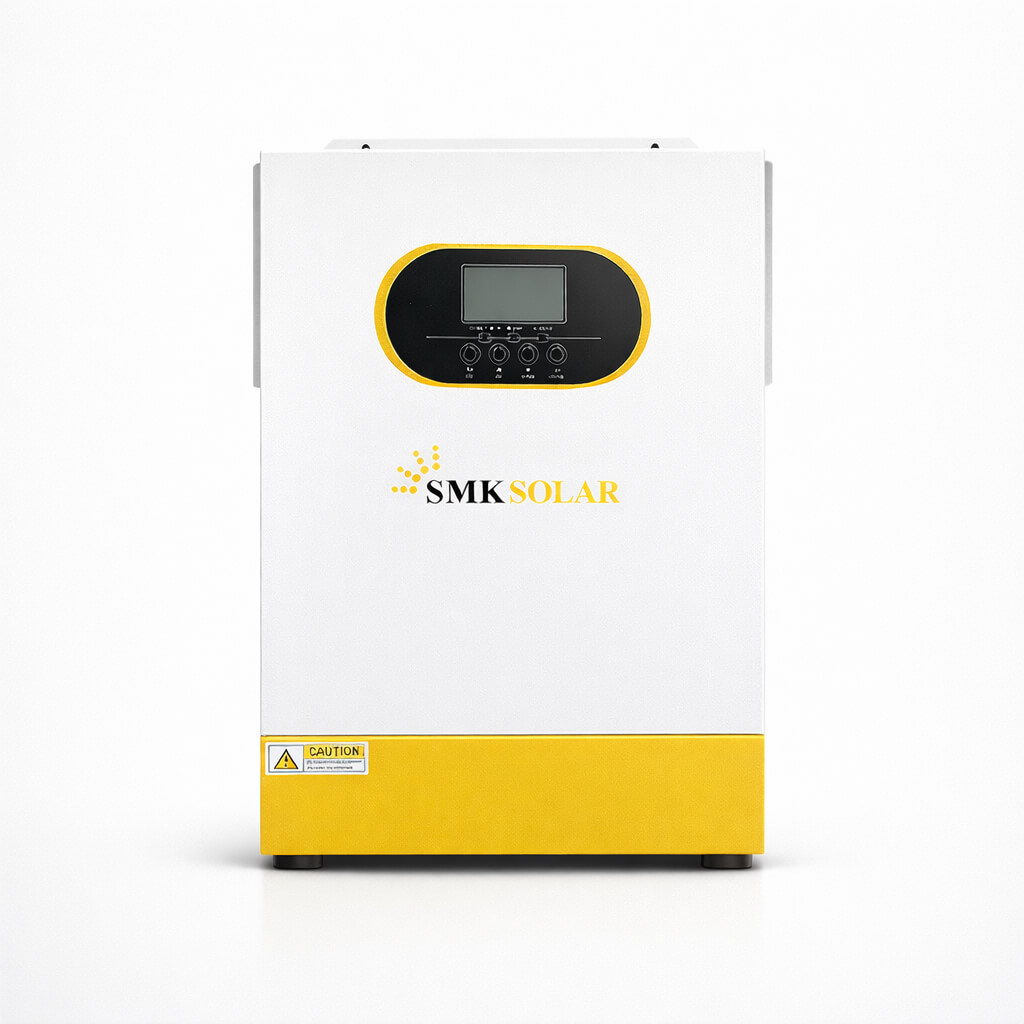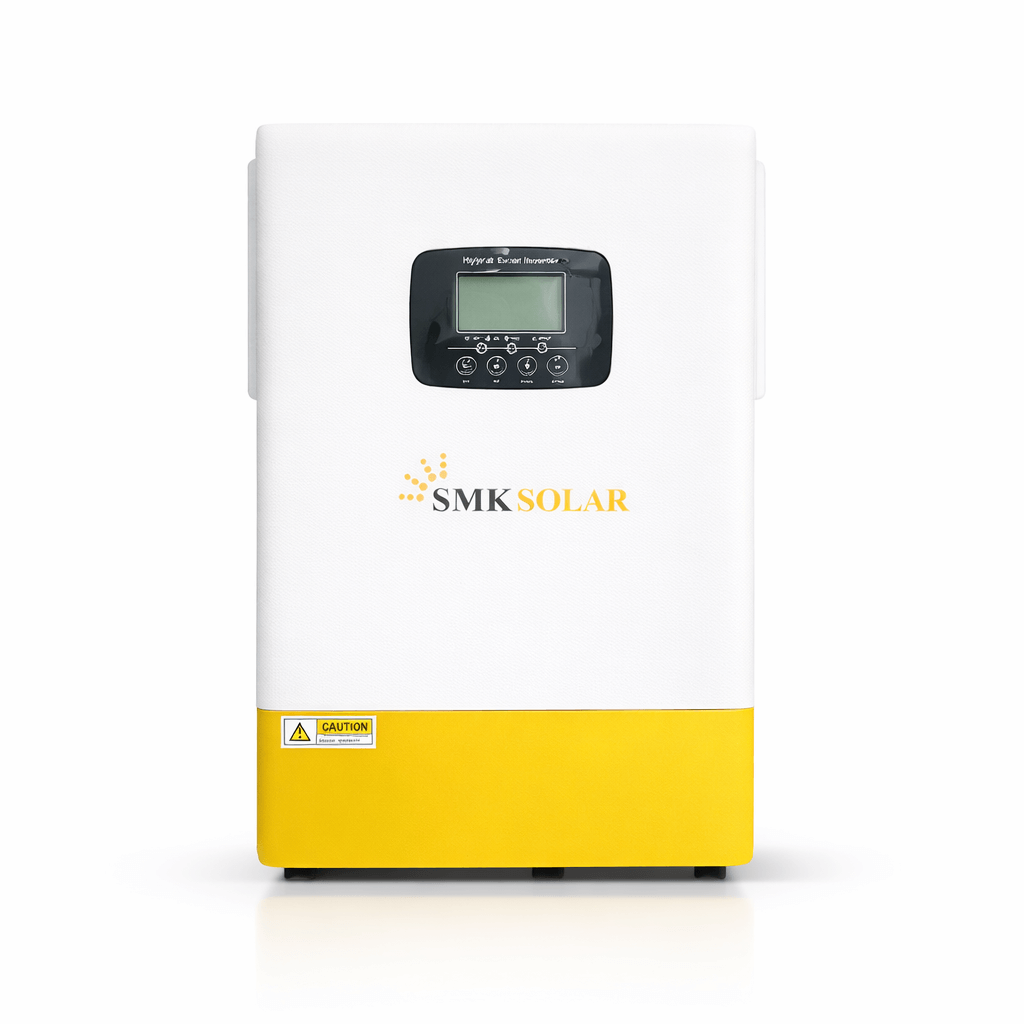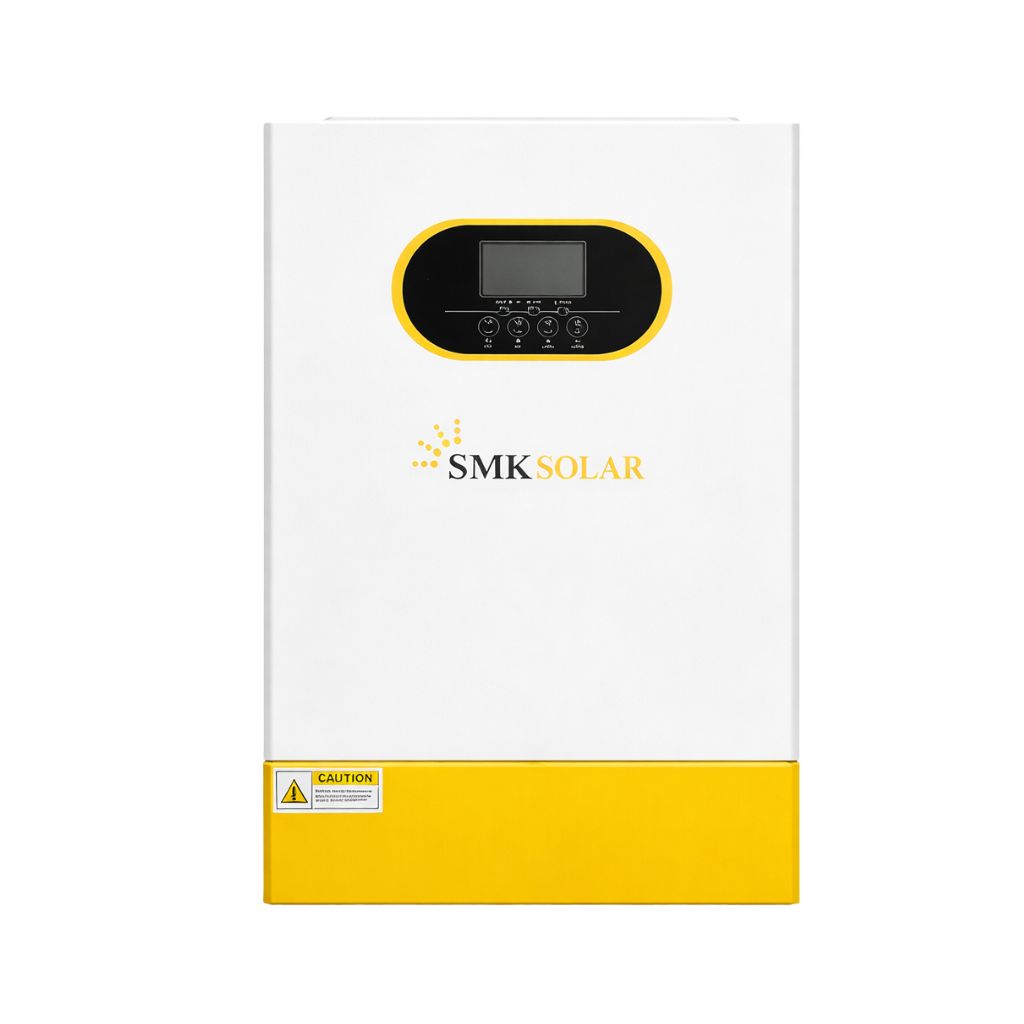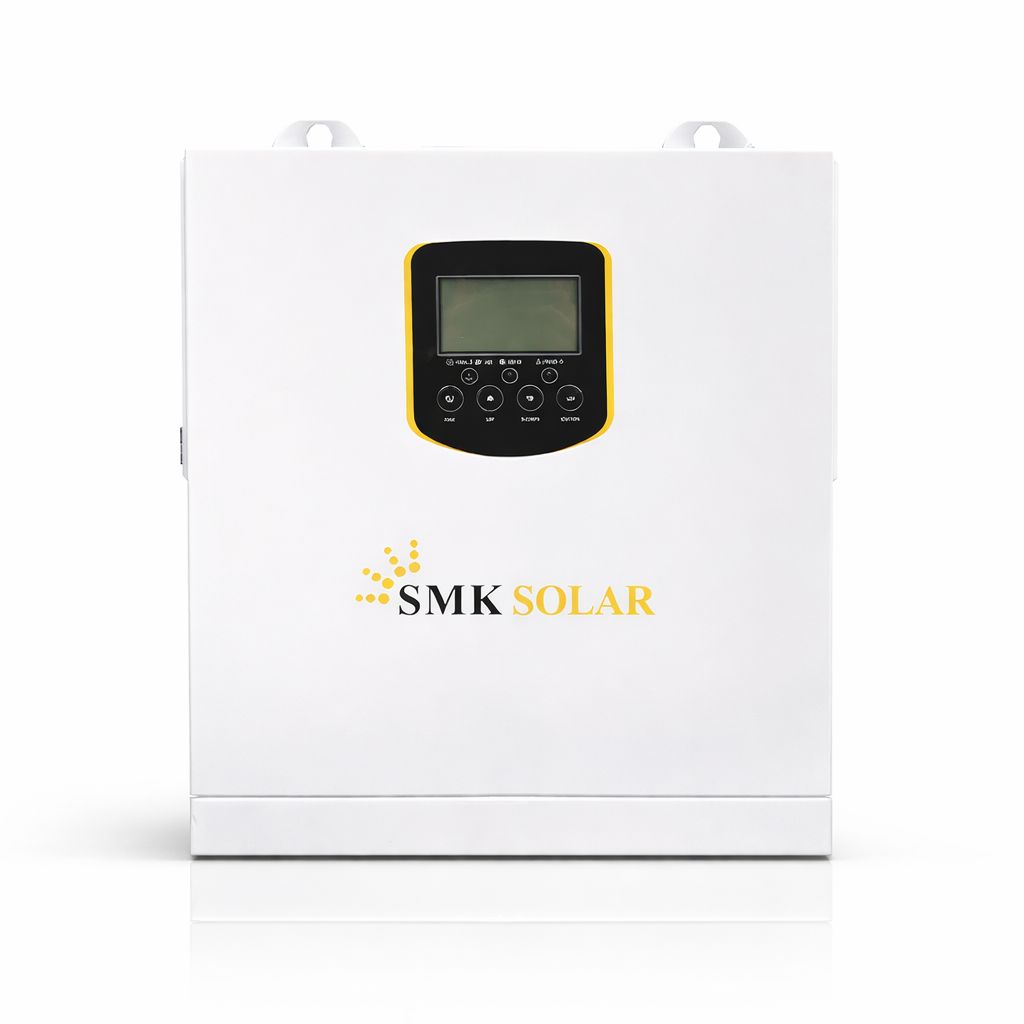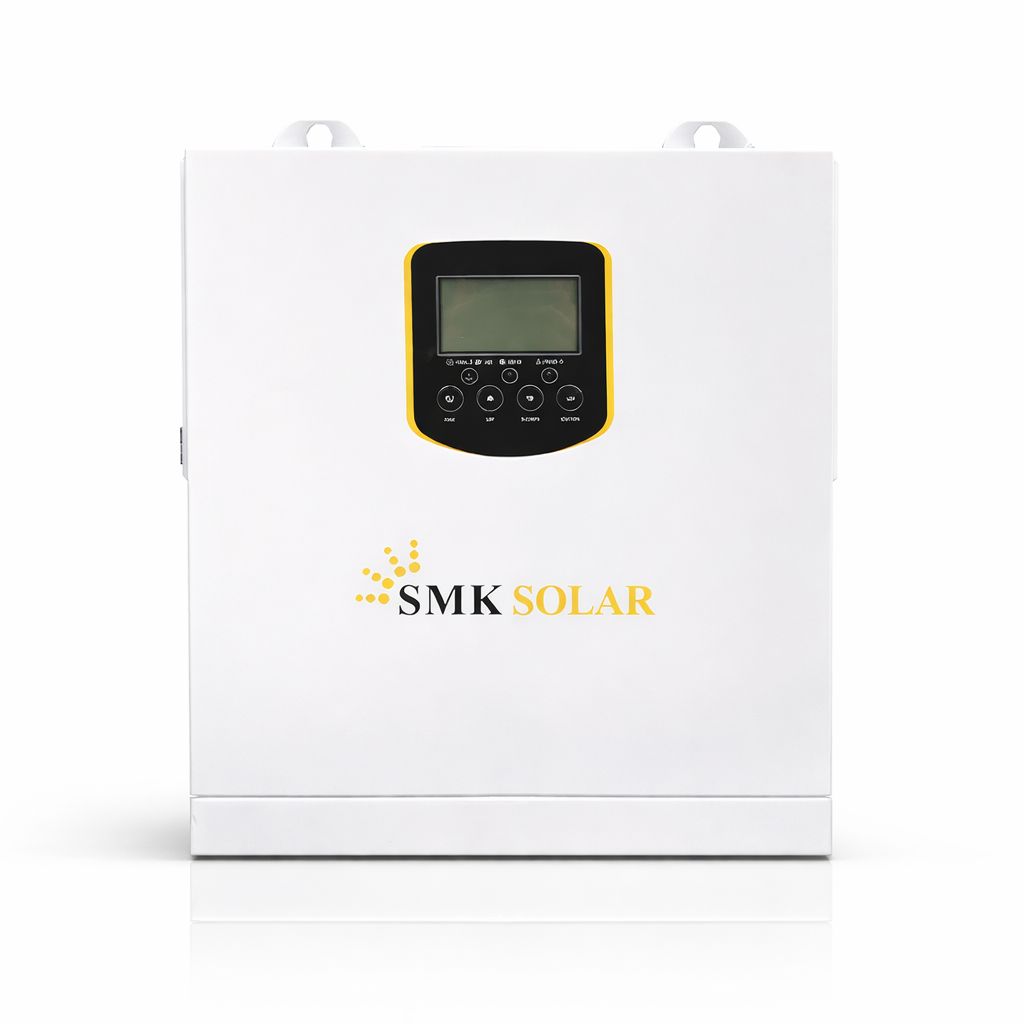
If you are running two or more air conditioners, a full-size refrigerator, a chest freezer, and a home office in Lagos — and your current inverter cannot carry all of it without tripping, or your generator bill has climbed past ₦100,000 a month — you have simply outgrown mid-range capacity. The EM6200-48L 6.2kVA Hybrid Inverter is built for that load: a 48V system with a 12,400VA surge capacity, 6,500W of solar input, full lithium battery communication, and the ability to run directly from solar panels without a battery installed, giving you maximum flexibility at every stage of building your system. SMK Solar has been designing and installing complete solar systems for Nigerian homes and businesses since 2016, and this inverter is our recommendation for anyone who needs to power a large property without compromise or daily rationing
The EM6200-48L is a 48V hybrid inverter rated at 6.2kVA — and because it operates at a power factor of 1.0 for standard home and office loads, its 6.2kVA rating equals 6,200 watts of real, continuous usable power. The kVA figure describes the maximum total electrical load the inverter can handle at any moment; the watts figure is what your appliances actually draw from it. For this unit running typical household or small commercial loads, those two numbers are identical.
What “Hybrid” means:
A hybrid inverter is not a backup device that sits idle until NEPA fails — it is an active energy manager running continuously. It monitors three power sources simultaneously: solar panels, a battery bank, and the national grid, and automatically selects the most available and cost-efficient source at every moment based on your chosen priority setting. During daylight hours, solar panels power your appliances directly and charge the battery simultaneously. After sunset, the battery takes over. If the battery runs low and grid supply is present, the inverter draws from NEPA to sustain your loads and recharge the battery for the next cycle. The EM6200-48L goes further than a standard hybrid by also operating without a battery when solar generation alone is sufficient — and by activating and communicating with a lithium battery pack via RS485 from either solar or grid supply.
With 6,200W of continuous output and a 12,400VA surge capacity — twice its rated output — this inverter is built to carry the full load of a large Nigerian household or small commercial premises without strain:
The EM6200-48L does not support parallel connection, meaning two units cannot be combined to extend total output beyond 6.2kVA. If your load includes three or more large air conditioners running simultaneously, industrial refrigeration, borehole pumps above 1.5HP, or any equipment requiring more than 6,200W of continuous supply, a parallelable inverter system is the appropriate choice. This inverter operates on a 48V battery system, which requires four 12V batteries in series, two 24V batteries in series, or a purpose-built 48V lithium pack — existing 12V or 24V battery banks from a previous inverter cannot be carried over without expansion or replacement. Electric cookers, water heaters, and pressing irons remain unsuitable regardless of inverter size, as their heating elements consume power continuously at levels that crowd out every other appliance. Our team in Lagos is available to review your complete appliance list and confirm the right fit before you commit.
The EM6200-48L operates on a 48V battery system, requiring four 12V batteries wired in series, two 24V batteries in series, or a single purpose-built 48V lithium battery pack. It supports both LiFePO4 lithium and conventional lead-acid tubular batteries, with full RS485 lithium communication for smart battery management. For lithium buyers, the RS485 connection allows the inverter to communicate directly with the battery’s BMS — the internal safety circuit that governs how the battery charges and discharges — enabling precision charging and active protection against overcharge or deep discharge. The EQ charging function periodically balances lead-acid tubular battery cells to prevent capacity loss from uneven cycling, extending the battery bank’s usable life before replacement becomes necessary. At 6.2kVA, battery bank sizing becomes especially important — a correctly sized 48V battery ensures the system can cover your full load through your longest typical outage without the battery running flat before morning. Our team can calculate the right capacity for your specific daily usage and location.
The EM6200-48L is built for buyers who have mapped their actual load, know that 5.5kVA still leaves them rationing appliances, and want a system that runs everything in a large Nigerian home or small business through daily outages without a single compromise.
A household in Lagos running a 5kVA petrol generator for 8 hours daily at ₦1,500 per litre, consuming roughly 2.5 litres per hour, spends approximately ₦900,000 per year on fuel before a single maintenance visit — a figure that climbs further every time the pump price increases. Replacing the majority of that daily runtime with solar-charged battery power through the EM6200-48L, drawing from up to 6,500W of solar panels, reduces that annual cost to a fraction and typically delivers full system payback within 18–24 months for high-consumption Lagos and Abuja households.
The EM6200-48L delivers pure sine wave electricity across its full 6,200W output — the smooth, consistent waveform that inverter air conditioners, variable-speed refrigerator compressors, laptops, and sensitive medical or office equipment are all designed to receive without stress or long-term degradation. Modified sine wave inverters at this capacity level produce a stepped waveform that causes inverter ACs to draw more current than their rated consumption, accelerates compressor wear, and voids most appliance warranties — a compounding risk when two or three AC units and a full refrigeration load are all connected to the same system simultaneously.
The EM6200-48L consolidates MPPT solar charge controller, automatic source switching across four priority modes, EQ battery management, and inverter output into a single 9kg wall-mounted unit — replacing what would otherwise require multiple separate components, additional wiring runs, and several extra points of potential failure. The optional WiFi monitoring module gives you a live view of solar generation, battery state of charge, and total connected load from your phone at any time, without visiting the installation or calling your electrician.
Our team will review your full appliance list and show you exactly what a complete EM6200-48L system covers and costs for your property.
Large household owners in Lagos running two or three air conditioners, a full-size refrigerator, a chest freezer, and whole-house lighting who need an inverter with the surge capacity to start multiple compressors without tripping — the 12,400VA surge rating handles simultaneous AC startups across a full home load.
Multi-floor duplex owners in Abuja and Lagos where a single 3.5kVA or 5.5kVA inverter cannot carry ground floor and upper floor loads simultaneously, and a 6.2kVA system brings the entire property under one properly managed power circuit.
Small business owners operating a cold room facility, restaurant, medical clinic, or busy office suite in Lagos or Benin City who need refrigeration, multiple AC units, computers, printers, and POS systems all active through outages — without the ₦900,000-per-year fuel cost and daily noise of a large generator.
Residents anywhere in Nigeria where daily grid availability falls to 3–5 hours — paired with a 48V lithium battery bank and 5,000–6,500W of solar panels, this inverter can power a full large-household load through a 20-hour outage on any day with good sunlight.
Buyers transitioning from generator to solar who currently run a 5kVA or larger generator daily and want an inverter sized to replace that generator's output entirely, rather than partially, so no appliance rationing is required.
Property developers and landlords in Lagos fitting out multi-unit short-let apartments or guesthouses who need a single inverter capable of powering shared common areas plus individual unit loads without splitting the system across multiple smaller inverters.
Forward-thinking buyers starting with lead-acid tubular batteries who want an inverter already equipped with RS485 lithium communication and EQ charging, so upgrading to a lithium battery in future requires no change to the inverter itself.
|
Spec |
Value |
|
Model |
EM6200-48L |
|
Capacity |
6,200 VA / 6,200 W |
|
Battery Voltage |
48 VDC |
|
Floating Charge Voltage |
54 VDC |
|
Overcharge Protection |
63 VDC |
|
PV Input Voltage Range |
60 VDC – 500 VDC |
|
Max PV Array Power |
6,500 W |
|
Built-in MPPT Rating |
60A / 100A / 120A |
|
Max Solar Charge Current |
120 A |
|
Max AC Charge Current |
80 A |
|
Max Total Charge Current (PV + AC) |
120 A |
|
Output Waveform |
Pure Sine Wave |
|
Power Factor |
1.0 |
|
Surge Capacity |
12,400 VA |
|
Lithium Battery Activation |
Yes (by PV or Utility) |
|
Lithium Battery Communication |
Yes (RS485) |
|
Batteryless Operation |
Yes |
|
EQ Charging Function |
Yes |
|
Output Priority Modes |
UTL / SOL / SBU / SUB |
|
Remote Monitoring |
Optional WiFi |
|
Environmental Protection |
Detachable dust cover |
|
Dimensions (D × W × H) |
438 × 295 × 105 mm |
|
Net Weight |
9.00 kg |
|
Warranty |
18 Months |
The EM6200-48L provides 6,200W of continuous output, which covers two 1HP air conditioners, one 1.5HP air conditioner, a full-size refrigerator, a chest freezer, up to 15 LED bulbs, four ceiling fans, a large television, three laptops or desktops, a WiFi router, and a water dispenser all running at the same time. A combined running load of those appliances typically sits between 4,500W and 5,200W — within the inverter’s continuous ceiling with genuine headroom. Electric cookers, water heaters, pressing irons, and borehole pumps above 1.5HP are not suitable, as their continuous draw would push total consumption dangerously close to or beyond the inverter’s safe operating range.
Yes. The EM6200-48L can operate in batteryless mode, drawing power directly from solar panels to run connected appliances during daylight hours with no battery bank present. This allows buyers to start with panels only and add a 48V battery bank later as budget allows, without replacing or reconfiguring the inverter. At night or during extended cloud cover without a battery installed, the inverter will draw from the grid if NEPA supply is available, or suspend output if neither source is present.
The EM6200-48L requires a 48V battery system — four 12V batteries in series, two 24V batteries in series, or a single 48V lithium pack. It supports both LiFePO4 lithium and lead-acid tubular batteries. Lithium batteries are the stronger long-term choice at this capacity level — they last 8–10 years under regular deep cycling, charge faster, and can be discharged more deeply without degrading, which matters significantly when a 6.2kVA system is powering a heavy load through a 20-hour outage every day. For buyers starting with tubular batteries, the EQ function extends battery life by preventing the cell imbalances that cause capacity loss over time.
EQ stands for Equalisation — a periodic charging mode where the inverter applies a controlled higher-than-normal charge voltage to a lead-acid battery bank in order to balance the charge level across all individual cells. Over time, cells in a battery bank charge and discharge at slightly different rates, causing weaker cells to drag down the overall capacity of the bank. Left uncorrected, this imbalance shortens the battery’s usable life significantly. The EQ function runs automatically at set intervals and corrects the imbalance before it becomes permanent — extending the period before a battery bank needs replacing, which at 48V with four batteries represents a meaningful cost saving.
The EM6200-48L carries an 18-month manufacturer’s warranty covering defects in materials and workmanship under normal operating conditions. The warranty does not cover damage from incorrect installation, overvoltage from an improperly configured solar array, physical damage, water ingress, or use with batteries outside the inverter’s specified voltage range. SMK Solar supports warranty claims for customers who purchased through our Lagos store or authorised channels — retain your purchase receipt and record your installation date before making a claim.
A standard inverter converts stored battery power into AC electricity and charges the battery from the grid when NEPA is available — that is the complete extent of its function. The EM6200-48L adds 6,500W of solar charging capability, full lithium battery communication and activation from both solar and grid, batteryless operation, four output priority modes, and an EQ battery maintenance function. In SBU mode, it exhausts solar and battery power before drawing a single unit from the PHCN grid — actively working to reduce your electricity bill and generator dependency every day, rather than simply switching on when both fail.
A well-installed hybrid inverter of this class typically lasts 8–12 years under normal residential or light commercial use. At 6.2kVA, the DC battery wiring carries particularly high current during charging — up to 120A — which makes correctly sized cables even more critical than at lower capacities. Undersized cables at that current level generate sustained heat that degrades both the cables and the inverter’s internal components over time. Installing the unit in a ventilated, shaded location with the detachable dust cover in place — especially in Kano, Abuja, and Lagos Island coastal environments where dust and salt air are persistent — protects the cooling system and extends service life significantly.
Yes — the EM6200-48L is one of the most capable options in our range for households and businesses in communities like Benin City, Uyo, and parts of Kano where grid supply can be absent for 18–22 hours daily. In SBU mode, any brief period of NEPA supply is used to top up the battery rather than power loads directly, preserving grid units as a reserve. Paired with a 48V, 200–300Ah lithium battery bank and 5,000–6,500W of solar panels, this system can realistically power a full large-household load through a 20-hour outage on a day with good Lagos or Abuja sunlight, entering the night period with the battery at or near full capacity.
The SBU priority mode makes the EM6200-48L particularly effective for households and businesses on Band A tariffs in Lagos, currently at approximately ₦206–₦225 per kWh. In SBU mode, the inverter will not draw from the PHCN grid until both solar and battery are depleted — meaning on any day with adequate sunlight, your electricity meter stays inactive for the majority of the active day. A household running 5,000W of load for 8 hours on grid power under Band A pays approximately ₦8,240–₦9,000 per day in electricity alone; replacing that with solar-charged battery supply through this inverter reduces that daily grid cost close to zero on clear days, with the system paying for itself through electricity savings within 18–24 months in most Lagos conditions.
Yes, without exception — and at 6.2kVA on a 48V system, this point is more important than at any smaller capacity. The DC battery wiring carries up to 120A of charge current, and undersized cables at that level create a genuine fire risk within the walls of your building. The AC output circuit connects directly to your property’s wiring and carries live voltage to appliances throughout. Both circuits require correctly sized cables, correctly rated protective fuses or breakers, proper earthing, and a qualified electrician who understands solar DC and inverter AC wiring. The EM6200-48L’s all-in-one design reduces installation complexity by eliminating a separate transfer switch and charge controller, but the job is not DIY territory. SMK Solar can connect customers in Lagos, Abuja, Benin City, Uyo, and Kano with certified installers in their area.
Step into any of our branches in Lagos, Kano, Benin, or Uyo to see our SMK technology in action and speak with our technical team.
Tell us what you need to power, and our engineers will design a customized SMK Solar solution tailored to your home or business.
Have questions or need advice? Reach out to our professional team and get fast, reliable assistance.
WhatsApp us