
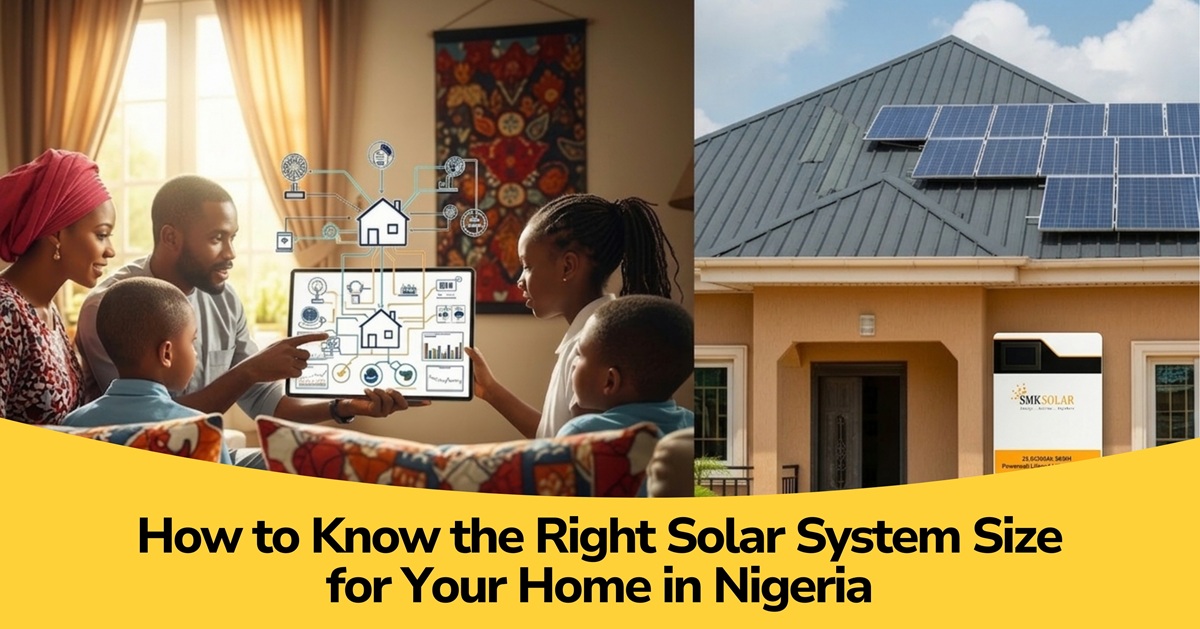
One of the biggest mistakes people make with solar is buying a system that is too small or far bigger than they need. Both lead to frustration and wasted money.
The right solar system size depends on how you live, not guesswork or pressure from a seller.
This guide explains, step by step, how to determine the right solar system size for your hom so you get steady power without overspending.
Solar sizing is not just technical it affects your daily comfort.
If your system is too small:
If your system is too large:
Getting the size right gives you:
Start with honesty, not what you wish to power, but what you actually use every day.
Write down your appliances, such as:
Also, note how many of each appliance you use.
This list is the foundation of your solar system design.
Usage time matters just as much as the appliance itself.
Ask yourself:
Not everything must run on solar, especially when starting.
Essentials usually include:
Extras may include:
If your budget is limited, start with essentials and expand later. Many homeowners do this successfully.
Batteries determine how long you have power at night or during outages.
To size batteries correctly, consider:
Homes that stay active late need more battery capacity than homes that sleep early.
Solar panels need space and direct sunlight.
Before installation, check:
Limited space may reduce the number of panels you can install, which affects total system size.
A professional assessment helps you avoid this mistake.
Solar systems come in levels, not one fixed price.
You can:
A good installer will explain these options clearly, not pressure you to overspend.
Many performance issues come from avoidable mistakes:
These mistakes often lead to poor results and unnecessary expenses.
The most reliable way to determine your solar system size is through a professional power assessment.
At SMK Solar, we:
This saves money, prevents frustration, and ensures your system fits your real lifestyle.
The right solar system size gives you steady power without strain.
It supports your daily life, protects your investment, and grows with your needs.
If you are considering solar, start with clarity not assumptions.
Talk to SMK Solar Nigeria today → /contact-us
Share:
Step into any of our branches in Lagos, Kano, Benin, or Uyo to see our SMK technology in action and speak with our technical team.
Tell us what you need to power, and our engineers will design a customized SMK Solar solution tailored to your home or business.
Have questions or need advice? Reach out to our professional team and get fast, reliable assistance.