
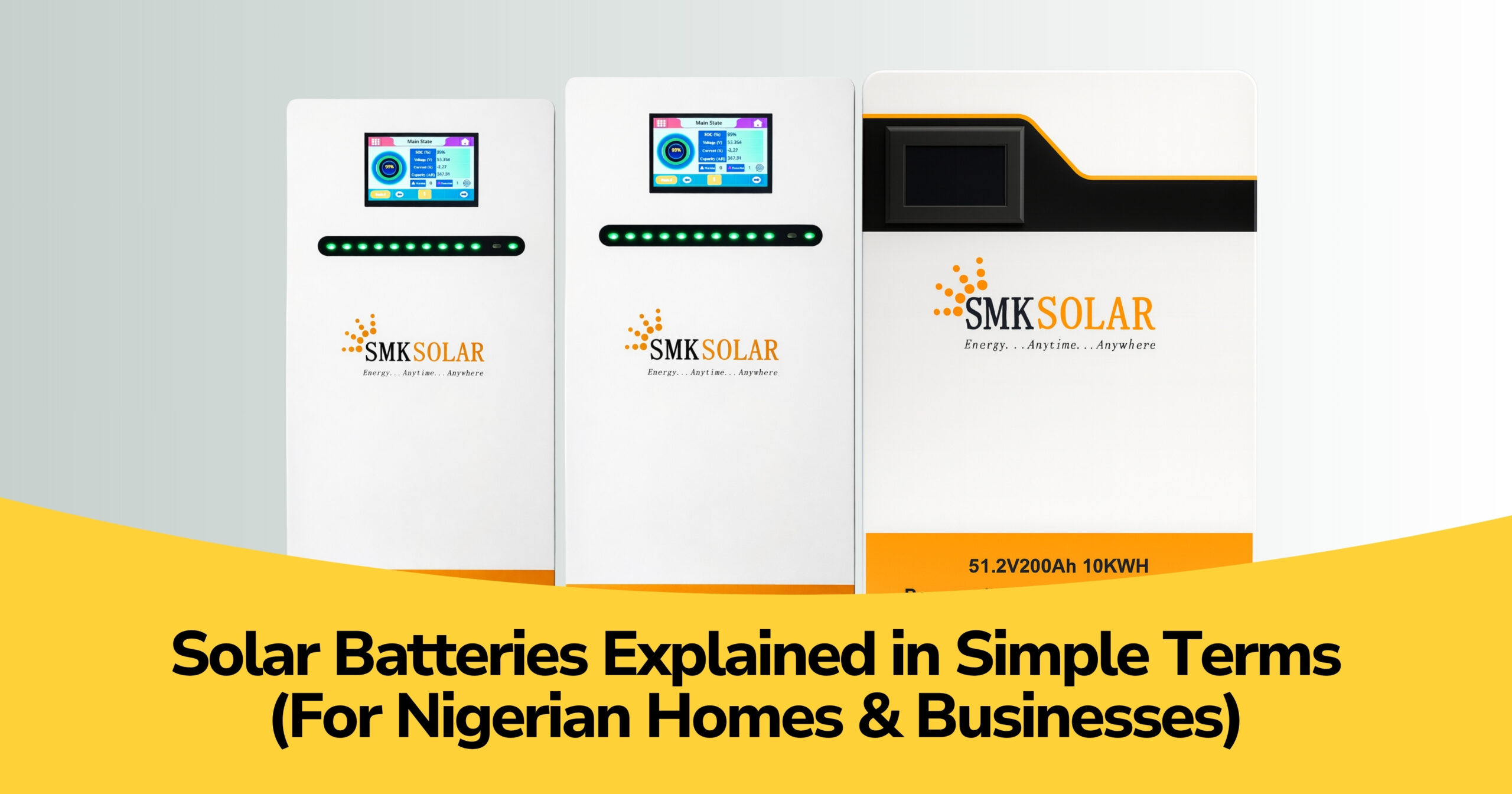
When people think about solar energy, they often focus on solar panels. But the real backbone of any solar system is the battery.
Without batteries, solar power would only work when the sun is shining.
This guide explains solar batteries in simple terms, what they do, how they work, the types available, and how to choose the right one for your home or business in Nigeria.
A solar battery stores electricity produced by your solar panels.
During the day, your panels generate power from sunlight. If you are not using all that power immediately, the extra energy is stored in the battery instead of being wasted.
Later at night, during blackouts, or when PHCN goes off the battery supplies electricity to your home or business.
In simple terms:
Solar batteries allow you to use solar power anytime, not just during the day.
Without batteries, solar power is limited. Batteries give you control, reliability, and peace of mind.
Solar batteries matter because:
For Nigerian homes and businesses dealing with unstable grid supply, solar batteries are not optional — they are essential.
Solar batteries work automatically and quietly in the background.
There is no manual switching. A properly installed system handles everything automatically.
If you want to understand how this works as part of a complete setup, you can check our guide on how a full solar system works for homes and businesses (internal link).
There are different battery types, but these are the most common in Nigeria.
These have been used for years and are common in older solar setups.
Pros:
Cons:
Lithium batteries are becoming the preferred choice for modern solar systems.
Pros:
Cons:
Many homeowners and businesses now choose lithium batteries because they save more money over time. At SMK SOLAR, we help clients choose the battery type that fits their usage, not just their budget.
Battery lifespan depends on:
On average:
This difference is why battery choice plays a big role in long-term solar cost.
Choosing a solar battery is not about buying the biggest one. It is about buying the right size.
You need to consider:
A small home with lights, fans, and a TV needs a very different battery setup from a business that runs freezers, computers, or air conditioners all day.
This is why a professional solar assessment matters. You can read more about this in our guide on how to size the right solar system for your home (internal link).
Many solar issues come from poor battery decisions.
Common mistakes include:
These mistakes often lead to poor performance, early battery failure, and frustration.
Solar batteries significantly reduce how often you need a generator.
Instead of running a generator every evening, your battery handles most of the load quietly. The generator then becomes a backup, not a daily solution.
This means:
A good battery system should:
If you are comparing options, you may find our post on solar vs generator cost over time helpful (internal link).
Choosing the right solar battery can feel confusing. That is where expert guidance makes all the difference.
At SMK SOLAR, we:
Our goal is simple: steady power without stress.
If you already have a solar system and want better backup, or you are planning a new installation, solar batteries are a critical decision.
Speak with SMK SOLAR today to get clear answers and a system that truly works for your home or business.
Share:
Step into any of our branches in Lagos, Kano, Benin, or Uyo to see our SMK technology in action and speak with our technical team.
Tell us what you need to power, and our engineers will design a customized SMK Solar solution tailored to your home or business.
Have questions or need advice? Reach out to our professional team and get fast, reliable assistance.