
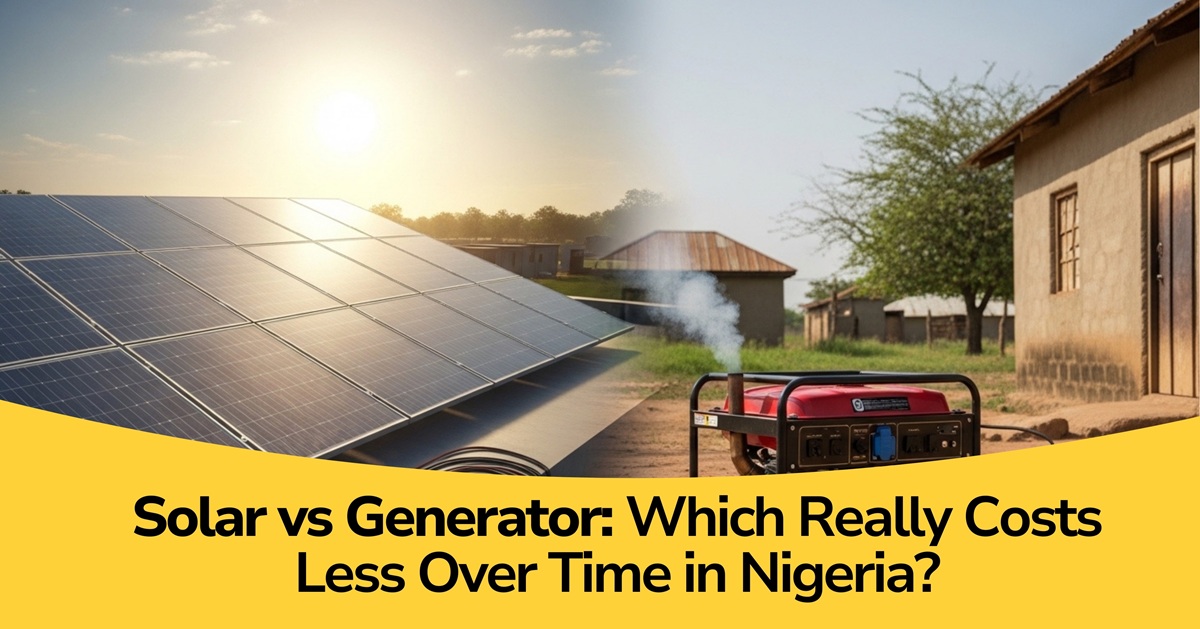
For many Nigerian homes and businesses, generators have been the default backup power option for years. They feel familiar; you buy one, add fuel, and it runs.
Solar power, on the other hand, often feels like a big step. The setup cost looks high at first glance, so many people delay the switch.
But when you look beyond the first payment and focus on long-term cost, the story changes.
This post breaks it down clearly and honestly, so you can decide what truly saves money over time.
The Real Cost of Using a Generator in Nigeria
A generator does not stop costing money after purchase. It comes with continuous expenses that add up quietly.
Most generator owners regularly pay for:
Fuel prices in Nigeria are unstable. A generator that seems affordable today can become extremely expensive within months.
For businesses, generator downtime also means:
The Real Cost of Solar Power
Solar power works differently. Most of the cost comes upfront, not daily.
Typical solar-related expenses include:
Sunlight is free. Once installed, a solar system runs quietly without daily spending on fuel.
A Simple Cost Comparison Example
Let’s look at a basic scenario.
A small business running a generator may spend money on fuel and servicing every week. Over one year, that cost can equal or even exceed the price of a small solar system.
After two to three years:
This is why generators often feel cheaper in the short term, but solar costs less over time.
Hidden Costs People Often Forget
Generators are loud. They affect sleep, meetings, and general peace.
Solar systems operate silently.
Buying fuel, fixing breakdowns, and calling repair technicians takes time.
Solar significantly reduces these interruptions.
Generator fumes affect air quality, especially in enclosed spaces.
Solar produces no smoke or fumes.
These hidden costs matter more than many people realize.
When a Generator May Still Make Sense
To be fair, generators still work in some situations:
However, for daily power use, relying only on a generator becomes expensive and stressful over time.
Why Many Nigerians Combine Solar and Backup Options
Some homes and businesses choose a hybrid setup:
This approach:
A good solar provider can help design a system that fits your exact needs. Get your custom quote
So, Which Really Costs Less Over Time?
For regular daily power needs, solar power is usually cheaper in the long run.
Generators keep demanding money. Solar asks for planning upfront, then delivers stability for years.
The key is:
If you are spending heavily on fuel and generator repairs, it may be time to review your options.
You do not have to switch everything at once. Many Nigerians start small and expand later.
The smartest next step is getting clear numbers based on your actual power usage.
Every power need is different. If you want to understand what solar would look like for your home or business:
Explore Solar Products & Freezers → /solar-freezers
Contact Our Team → /contact-us
Share:
Step into any of our branches in Lagos, Kano, Benin, or Uyo to see our SMK technology in action and speak with our technical team.
Tell us what you need to power, and our engineers will design a customized SMK Solar solution tailored to your home or business.
Have questions or need advice? Reach out to our professional team and get fast, reliable assistance.